
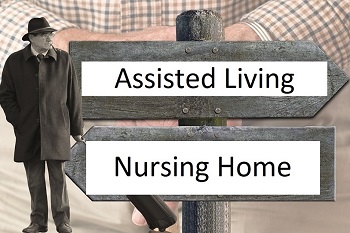
Seniors have several options they can choose from when looking for a place to spend their post-retirement years. The most popular senior living options are assisted living facilities and nursing homes. Many people confuse the two to be similar, but the truth is that there is much difference between assisted living and nursing home when it comes to types of care services, levels of activities, admission requirements, living accommodations, staff personnel, costs as well as payment options. Read on to uncover a detailed comparison between assisted living facilities vs nursing homes.
Nursing homes are places where older adults can stay when they need 24-hour nursing care that they cannot access at home or any other retirement communities. They are the next level down from hospitals.
A majority of the inhabitants in nursing homes have significant deficiencies in regards to daily living responsibilities, thus they require help with all or majority of the ADLs all the time. It is because nursing homes house the elderly who have serious injuries or illnesses. State levels regulate and license nursing homes. Only licensed practical nurses or registered nurses provide care in nursing homes and a physician’s order is mandatory before admission.
Assisted living facilities on the other hand mostly cater to highly independent individuals who are healthy and only need a hand with a couple of daily living tasks. They fall between autonomous independent living communities that cater to active senior citizens and the nursing homes that provide medical care round the clock. The level of care in assisted living is something between independent living and nursing home. Furthermore, residents of assisted living facilities consider the facilities as wellness environments that promote independence and high-quality life in old age.
Assisted living communities offer help with daily living responsibilities that include:
Some assisted living facilities have onsite clinics and resident nurses who oversee medical services like offering medication administration and management. The facilities also take care of other things like grocery shopping, transportation, and finance management. Aging individuals who opt to reside in assisted living homes can also receive medical services through regular channels, such as going to doctor’s appointments or with on-site or visiting nurses. Other than this, the assisted living facilities also offer community-based activities that residents take part in. Examples of activities to expect in assisted living communities may include:
Most assisted living facilities feature communal areas where peers can socialize as they get to know each other. Most assisted living facilities are pet friendly, while pets are not allowed in nursing homes at all. Even though they typically do not get licenses to offer medical services, today some assisted living communities have specialized areas where they look after elderly residents who have memory care issues. Some facilities even make it possible for their occupants to age in place, by offering continuing care retirement services, making sure that the facilities meet the ever-changing needs of the seniors all throughout retirement.
Personnel who work in assisted living facilities also strive to offer life enrichment to meet the spiritual, physical, and emotional needs of the older adults, making sure that they are happy and content and look forward to each day of their formative later years.
Nursing homes are very different from assisted living facilities. In addition to the personal care services and medication management and administration, nursing homes also offer skilled nursing services and medical treatments. A majority of people who stay in nursing homes come straight from the hospital where they were getting treatment for a particular disease or have gone through surgical procedures.
Personnel at nursing homes handle different cases. They can look after an individual who fell and broke their hips or bones or people who are recovering from a stroke and are relying heavily on walkers or wheelchairs for mobility. Staff in nursing homes can also offer speech, physical, and occupational therapy. Some nursing homes even include individual care units for people who have memory problems like dementia or Alzheimer's disease, similar to memory care services offered by assisted living facilities. Other reasons why senior citizens may have to stay in a nursing home include:
Unlike in assisted living facilities, excursions and fun activities are usually not a primary feature of nursing homes. It is because nursing home residents are often cognitively or physically unable to participate in such activities. Keep in mind that nursing homes also offer occupants less freedom during the duration of their stay than what they’d get with assisted living, where nursing home residents are more confined to their living quarters and are monitored very closely.
As mentioned earlier, not much goes on in the skilled nursing facilities vs assisted living facilities when it comes to entertainment activities because of the medical necessities of the residents in nursing homes.
In comparison, assisted living communities have many more fun activities and entertainment options than nursing homes, which can include mental exercises, playing cards and group outings. Some more luxurious assisted living homes even go a step further to employ activities coordinators who are in charge of coming up with exciting and age-appropriate events that seniors love. They work hard to try to entertain the elderly residents in a way that keeps them engaged and active as they pursue their hobbies.
With assisted living, retirees also have a say in regards to the activities they will participate in to ensure that they only do the things that they love. No one forces the aging individuals to do anything as participation is usually voluntary. However, staff members encourage involvement since it helps to deal with vices like isolation and loneliness that can result in anxiety, depression, and a myriad of other health complications – some of which can even result in requiring nursing home level of care.
The best candidates for assisted living communities are independent individuals who can still handle a bulk of their day to day activities without requiring a lot of assistance. It is because assisted living facilities typically assist retirees with self-care while offering more independence and privacy to the older generation.
Because they take care of the elderly only, most occupants in assisted living communities are usually in their eighties. Many facilities will also not admit individuals who are younger than fifty-five. Studies also reveal that a majority of residents in the residential care facilities for the elderly are usually women because many outlive males who belong to the same age-group.
Adults who reside in assisted living facilities can be afflicted with early stages of Alzheimer’s. Most of them converse coherently, and they can also comprehend directions without too much trouble.
Individuals who stay in the skilled nursing facilities, also known as nursing homes, are usually dependent on the people who take care of them. It is because most of the time they have severe illnesses or injuries that can make them bedridden or incapable of handling many things on their own. The best candidate for a nursing home is someone who requires constant supervision and care 24/7. There is no age restriction when it comes to the type candidates that can stay in nursing homes. Skilled nursing facilities typically admit any person who needs the level of medical services that they offer.
While both options provide older adults with secure environments, a majority of the skilled nursing homes present residents with bedrooms that they share. Their structures usually mirror the ones that hospitals use, and residents of nursing homes generally do not have any privacy.
Assisted living facilities, on the other hand, typically take on more of a senior housing approach with most residents having their own dedicated apartments. Residents in assisted living communities have the opportunity of choosing the living quarters that suit them best. Most homes allow occupants to determine whether they will stay in a studio apartment or one that has one bedroom or even several.
Most of the assisted living facilities also allow couples to stay together. New homeowners in the facilities also have the choice of decorating and furnishing their new living space as they wish to make it feel more homely and comfortable. Living quarters in assisted living can come with kitchenettes and private bathrooms if an individual is looking for such an environment.
Assisted living facilities for the elderly commonly employ certified caregivers who look after the occupants. Other professionals who work in assisted living homes may include administrators, directors, admissions coordinators, housekeepers, nurses, dining staff, volunteers, and aides.
As compared to assisted living, nursing homes collaborate closely with nurses, doctors, and other medical personnel like physical therapists, dieticians, and certified nursing assistants to provide the services that meet the medical needs of the occupants.
The staff members in nursing homes offer around the clock care for both physical and mental issues. Support employees may include custodians, groundskeepers, and maintenance personnel. They are responsible for maintaining the appearance and functioning of nursing homes. Nursing homes also have either visiting doctors and nurses or have them on-site, and they regularly monitor things like blood pressure and medication. Because the level of medical care is much greater for nursing home patients than for assisted living residents, nursing homes also have visiting pharmacists who check each nursing home patient generally at least once per month to make sure they are taking proper medications.
Depending on the services that the assisted living facilities offer, senior citizens may end up staying many years in their new living quarters. Some senior living facilities make it possible for residents to receive continuing care services and accommodations and spend the rest of their lives without moving to any other place. Such facilities are called continuing care retirement communities, and they generally include both independent living, assisted living and even nursing homes all in one community.
Many people who end up in nursing homes do not stay more than half a year in the institutions. Because a majority of occupants go to nursing homes to receive rehabilitative care after incidents like heart attacks or stroke, they only stay for a couple of months before going back home or seeking alternative senior care options. There are some older adults who end up staying several years in nursing homes, but this isn’t the norm.
Comparing the costs of residential-style assisted living and intermediate care nursing homes reveals that the nursing homes are much more expensive. The national average price of nursing homes last year was over $7100 per month for a semi-private room and over $8100 for a private room, as compared to just $3750 national average for assisted living facilities. It is because nursing homes have to offer intensive skilled nursing as well as related care at all times, thus their personnel costs are much higher. Nurses and visiting doctors, as well as pharmacists are more expensive to keep on staff.
Remember that nursing homes provide a cost-effective option that enables patients with acute illnesses, injuries, and post-operative care needs to recover well in a different environment from the ones that hospitals offer. Hospitals cost more than nursing homes for any sort of long-term stay.
A majority of the skilled nursing centers also use billing models that the hospitals use. The residents may pay flat rates on a daily basis to stay in semi-private rooms just like medical institutions. Additional supplies and services will also appear on the bill, if the patient requires any such services.
Now let’s compare assisted living costs to nursing homes and see how assisted living communities charge their clients. Most of the assisted living facilities work with an all-inclusive payment model. It is where a person receives one bill that covers their rent, housekeeping, meals, security, transportation, recreational activities and almost everything else that the occupant requires in a single month.
It is also possible to get tiered pricing in assisted living communities, where a person pays according to their needs. For instance, a person who requires no extra or very little care and only wants to enjoy the senior living arrangements and entertainment options in the assisted living homes pays less than the one who relies on staff members many hours daily for help with daily living activities.
Some assisted living facilities disregard the above options and go for a fee for services billing model. It means that residents pay a flat fee for rent and meals expenses and they receive all other services at an additional charge.
Medicare and Medicaid in most cases do not cover the costs of assisted living retirement communities. However, most states have introduced multiple waiver programs that support residents who have low income to afford staying in assisted living facilities.
Because nursing homes are medically licensed, some of the services they offer are billable to Medicare, Medicaid, and health insurance. A patient in a nursing home can also opt to pay for their stay using private funds.
Many people also utilize long-term care insurance to cover the costs of skilled nursing facilities. Note that federally-funded Medicare only pays nursing home costs for qualified individuals who have limited assets and income under particular circumstances, such as:
In contrast, state-funded Medicaid will pay for nursing homes for people who only need to qualify financially. These are people who have limited income and not enough assets, and they are staying at nursing homes that are Medicaid-certified. There are usually no restrictions in regards to length of stay, and there are also no limits on the payments. Requirements for eligibility of Medicaid coverage for nursing homes vary from one state to another.
Veterans and their surviving spouses can pick between three assisted care options when they are in need of nursing home care. The options are community-based services, state veteran’s homes, and VA owned facilities. All the above options have their admission and eligibility criteria.
The lifespan of the average Americans continues to increase rapidly, and the older generation is living out their days in intermediate care nursing facilities or assisted living communities. It is crucial to understand that even though assisted living facilities and nursing homes provide somewhat similar services and share some of the same goals, the care options also differ a lot.
It is, therefore, the responsibility of the older adults and their family members to look at both possibilities keenly to determine the best option that will take care of the needs of the residents properly. Examples of things to factor in include the mental state of aging individuals, medical needs, and personal preferences and requirements.
If a person is still having difficulties making a decision between assisted living and nursing home, it may be wise to research top nursing homes and assisted living facilities in your area. Take time to visit the best of both to find out more about what they have to offer. Consult carefully with management, staff members and some residents whenever possible. It should give you a clear picture on whether nursing homes or assisted living facilities work best for you.
Thank you. We will be in touch soon to provide you all the information.
Are you also interested in learning about long-term care insurance and how it can cover all senior living costs?
Yes, I'd love to learn more No, I will pay all senior living costs myselfThank you. A licensed insurance broker will call you soon to discuss how long-term care insurance can help you pay for senior living.
Close
